The aerospace industry is one of the most demanding and sophisticated sectors in the world, where precision, reliability, and safety are of utmost importance. Metal nuts, as essential fasteners, play a crucial role in ensuring the integrity and functionality of aerospace components. In this blog, as a metal nut supplier, I will delve into the specific requirements for metal nuts in the aerospace industry.
Material Requirements
The choice of materials for metal nuts in the aerospace industry is critical. These materials must possess high strength, excellent corrosion resistance, and the ability to withstand extreme temperatures.
High - Strength Alloys
Titanium alloys are widely used in aerospace applications. They offer a high strength - to - weight ratio, which is essential for reducing the overall weight of the aircraft. Titanium nuts can withstand high stress levels and are resistant to corrosion, even in harsh environments. For example, in the construction of aircraft wings and fuselages, titanium nuts are used to fasten structural components, ensuring the safety and stability of the aircraft.
Stainless steel is another popular material for aerospace nuts. It provides good corrosion resistance and mechanical properties. Austenitic stainless steels, such as 304 and 316, are commonly used. They can resist oxidation and corrosion from moisture, chemicals, and saltwater, making them suitable for both internal and external applications in aircraft.
Heat - Resistant Alloys
In areas where the nuts are exposed to high temperatures, such as near engines or in high - speed flight conditions, heat - resistant alloys are required. Nickel - based alloys, like Inconel, are often used. These alloys can maintain their strength and integrity at elevated temperatures, preventing deformation and failure of the nuts.
Dimensional Accuracy
Precision is key in the aerospace industry. Metal nuts must meet extremely tight dimensional tolerances. The thread pitch, diameter, and height of the nuts need to be within a very narrow range to ensure proper mating with bolts and other fasteners.
Thread Quality
The threads of aerospace nuts must be of high quality. They should have a smooth surface finish and accurate profile. Any irregularities in the threads can lead to improper fastening, which may result in loosening or failure of the connection. The thread form is typically standardized, such as the Unified Thread Standard (UTS) or the Metric Thread Standard, to ensure compatibility with other components.
Overall Dimensions
The overall dimensions of the nuts, including the width across flats, thickness, and chamfer, must be precisely controlled. This ensures that the nuts can be installed correctly and that they fit into the designated spaces within the aerospace components. For example, in avionics systems, where space is limited, the nuts need to have exact dimensions to avoid interference with other parts.
Surface Finish
The surface finish of metal nuts in the aerospace industry is not only for aesthetic purposes but also for functional reasons.
Corrosion Protection
A proper surface finish can provide an additional layer of corrosion protection. For example, nuts can be coated with zinc, cadmium, or other anti - corrosion materials. These coatings act as a barrier between the metal and the environment, preventing rust and corrosion. In addition, some nuts may be treated with special coatings to improve their lubricity, which helps in the installation and removal of the nuts.
Surface Smoothness
A smooth surface finish reduces the risk of stress concentration and wear. It also helps in preventing the accumulation of dirt and debris, which can affect the performance of the nuts. In high - vibration environments, a smooth surface can reduce the likelihood of fretting corrosion, which can weaken the connection over time.


Performance Requirements
Aerospace nuts must meet strict performance requirements to ensure the safety and reliability of the aircraft.
Tensile Strength
The tensile strength of the nuts is a crucial parameter. It determines the maximum load that the nut can withstand before breaking. In aerospace applications, nuts are often subjected to high tensile forces, especially during takeoff, landing, and flight maneuvers. Therefore, the nuts must have sufficient tensile strength to prevent failure.
Fatigue Resistance
Aircraft are subjected to cyclic loading during their operation. Nuts need to have good fatigue resistance to withstand these repeated stress cycles without cracking or failing. Fatigue failure can occur over time, even if the stress levels are below the ultimate tensile strength of the material. Therefore, proper material selection and manufacturing processes are essential to ensure high fatigue resistance.
Torque Requirements
The torque required to tighten the nuts is carefully specified in aerospace applications. Over - tightening or under - tightening can lead to problems. Over - tightening can cause the nuts to strip the threads or damage the mating components, while under - tightening can result in loose connections, which can lead to vibration and potential failure. Therefore, the nuts must be tightened to the specified torque values using calibrated tools.
Certification and Standards
The aerospace industry is highly regulated, and metal nuts must comply with various certification and standards.
International Standards
Standards such as the International Organization for Standardization (ISO) and the American National Standards Institute (ANSI) provide guidelines for the design, manufacturing, and testing of aerospace nuts. These standards ensure that the nuts meet the required quality and performance criteria.
Aerospace - Specific Standards
In addition to international standards, there are also aerospace - specific standards, such as those set by the Federal Aviation Administration (FAA) in the United States and the European Union Aviation Safety Agency (EASA). These standards cover aspects such as material specifications, manufacturing processes, and quality control.
Types of Metal Nuts in Aerospace
There are several types of metal nuts used in the aerospace industry, each with its own unique features and applications.
Threaded Coupling Nut
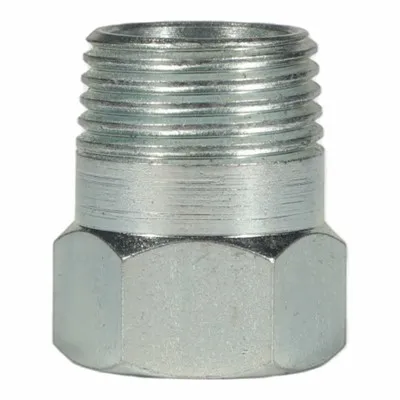
Threaded coupling nuts are used to connect two threaded rods or bolts. They are commonly used in applications where a long connection is required or where the components need to be easily disassembled. These nuts provide a secure and reliable connection, and their design allows for easy adjustment of the length of the connection.
Double Threaded Nut
Double threaded nuts have threads on both ends, which allows them to be used in applications where a connection needs to be made between two components with different thread sizes or where a more secure connection is required. They are often used in high - stress applications, such as in the landing gear of an aircraft.
Slotted Round Nut
Slotted round nuts are designed with slots on the outer surface, which allows for the use of a cotter pin or other locking devices to prevent the nut from loosening. They are commonly used in applications where vibration or movement may cause the nut to come loose, such as in engine components or control systems.
Conclusion
As a metal nut supplier, I understand the critical importance of meeting the requirements of the aerospace industry. From material selection to dimensional accuracy, surface finish, and performance, every aspect of the metal nuts must be carefully considered and controlled. By providing high - quality metal nuts that meet the strict standards of the aerospace industry, we can contribute to the safety and reliability of aircraft.
If you are in the aerospace industry and are looking for high - quality metal nuts, I invite you to contact me for procurement and further discussions. We have a wide range of metal nuts available, and our team of experts can help you select the right nuts for your specific applications.
References
- "Aerospace Fasteners Handbook", edited by the Society of Automotive Engineers (SAE).
- "Materials Science and Engineering: An Introduction", by William D. Callister, Jr. and David G. Rethwisch.
- Federal Aviation Administration (FAA) regulations and guidelines.
- European Union Aviation Safety Agency (EASA) standards.