What is the function of a bearing in a shaft?
As a shaft supplier, I've witnessed firsthand the crucial role that bearings play in the functionality of shafts. Bearings are essential components in many mechanical systems, working in tandem with shafts to ensure smooth and efficient operation. In this blog post, I'll delve into the functions of bearings in a shaft, exploring how they contribute to the overall performance of various applications.
1. Support and Load Distribution
One of the primary functions of a bearing in a shaft is to provide support and distribute loads. Shafts are often subjected to various forces, including radial loads (perpendicular to the shaft axis) and axial loads (parallel to the shaft axis). Bearings are designed to handle these loads and transfer them to the housing or other supporting structures.
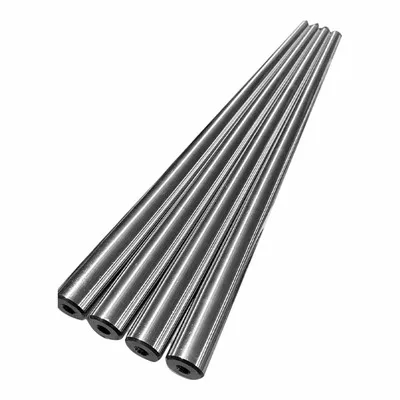
For example, in a Smooth Shaft used in a conveyor system, the bearings support the weight of the conveyor belt and the materials being transported. The radial loads generated by the weight are distributed evenly across the bearing surfaces, preventing excessive stress on the shaft and ensuring its long - term durability.
In an Industrial Drive Shaft application, such as a gearbox, the bearings not only support the weight of the gears but also handle the forces generated during power transmission. Axial loads can occur when the gears are meshing, and the bearings must be able to withstand these forces to maintain the proper alignment of the shaft and gears.
2. Reducing Friction
Friction is a major concern in any mechanical system, as it can lead to energy loss, heat generation, and premature wear of components. Bearings are designed to reduce friction between the shaft and the housing or other moving parts.
Most bearings use rolling elements, such as balls or rollers, to minimize the contact area between the shaft and the bearing race. This rolling motion significantly reduces friction compared to a sliding contact. For instance, in a high - speed rotating shaft, the use of a Bearing for Rotating Shaft with ball bearings can reduce friction to a fraction of what it would be if the shaft were in direct contact with the housing.
By reducing friction, bearings help to improve the efficiency of the system. Less energy is wasted in overcoming friction, which means that the system can operate with less power input. This not only saves energy but also reduces operating costs in the long run.
3. Enabling Rotation
Bearings are essential for enabling smooth and precise rotation of the shaft. They provide a low - resistance surface for the shaft to rotate on, allowing it to spin freely.
In applications where high - speed rotation is required, such as in electric motors or turbines, the quality of the bearings is crucial. High - precision bearings can ensure that the shaft rotates with minimal vibration and noise. This is important for maintaining the performance and reliability of the equipment.
For example, in a motor shaft, the bearings allow the rotor to rotate at high speeds without excessive wear or misalignment. The smooth rotation of the shaft is essential for the efficient conversion of electrical energy into mechanical energy.
4. Maintaining Alignment
Proper alignment of the shaft is critical for the optimal performance of a mechanical system. Bearings help to maintain the alignment of the shaft within the housing or other components.
During operation, the shaft may be subjected to various forces that could cause it to shift or become misaligned. Bearings are designed to resist these forces and keep the shaft in the correct position. This is particularly important in applications where multiple shafts are connected, such as in a complex machinery system.
In a multi - stage gearbox, for example, the bearings ensure that each shaft is properly aligned with the others. This alignment is necessary for the smooth meshing of the gears and the efficient transfer of power throughout the system.
5. Absorbing Shock and Vibration
Mechanical systems often experience shock and vibration during operation. Bearings can help to absorb these shocks and vibrations, protecting the shaft and other components from damage.
In applications such as automotive engines or heavy - duty machinery, the bearings act as a buffer between the shaft and the housing. They can dampen the vibrations caused by the engine's operation or sudden impacts, reducing the stress on the shaft and extending its lifespan.
For instance, in a car's drive shaft, the bearings absorb the vibrations generated by the engine and the road surface. This not only improves the comfort of the ride but also helps to prevent premature wear of the drive shaft and other related components.
6. Facilitating Maintenance
Bearings also play a role in facilitating the maintenance of the shaft and the overall mechanical system. They are designed to be easily replaceable, which means that when a bearing wears out or fails, it can be replaced without having to replace the entire shaft.
This ease of maintenance reduces downtime and repair costs. In many industrial applications, scheduled bearing replacements are part of the regular maintenance routine. By replacing the bearings at the appropriate intervals, the system can continue to operate smoothly and efficiently.
Conclusion
In conclusion, the bearings in a shaft serve multiple important functions. They provide support and distribute loads, reduce friction, enable rotation, maintain alignment, absorb shock and vibration, and facilitate maintenance. As a shaft supplier, I understand the significance of choosing the right bearings for different applications.
If you are in the market for high - quality shafts and bearings, I invite you to contact me for a detailed discussion. We can work together to determine the best solutions for your specific needs. Whether you require a Smooth Shaft, an Industrial Drive Shaft, or a Bearing for Rotating Shaft, I am here to assist you.
References
- Harris, T. A., & Kotzalas, M. N. (2007). Rolling Bearing Analysis. Wiley.
- Shigley, J. E., Mischke, C. R., & Budynas, R. G. (2004). Mechanical Engineering Design. McGraw - Hill.